
Beginner Friendly Aquarium Plants for Egg Layers to Spawn
Java moss, guppy grass, and water sprite are the best beginner friendly aquarium plants for egg layers to spawn because they provide fine-leaved surfaces for egg attachment, dense cover for fry protection, and require almost no maintenance.
These three plants tolerate a wide range of water parameters, grow quickly without strong lighting, and can float or anchor depending on your tank setup.
Egg-laying fish fall into two main breeding categories: egg scatterers and egg depositors. Egg scatterers, like tetras and barbs, release eggs randomly that fall through the water column. Egg depositors, like angelfish and corydoras catfish, place eggs on specific surfaces.
The plants below serve both breeding styles by offering varied textures and growth patterns.
Why Live Plants Matter in Breeding Tanks
Live aquatic plants do more than decoration in a spawning environment. They absorb ammonia and nitrates directly through their leaves and root systems. This natural filtration becomes critical in breeding tanks where frequent feeding increases organic waste.
Plants also release oxygen during photosynthesis, which supports the higher biological demand of developing eggs and growing fry.
Dense plant growth creates microclimates within the tank where infusoria and biofilm develop. These microscopic organisms serve as first foods for newly hatched fry too small to eat prepared foods.
Many aquarists rely on plant surfaces to culture these natural food sources before fry become large enough for baby brine shrimp or powdered feeds.
Fine-Leaved Plants for Egg Attachment
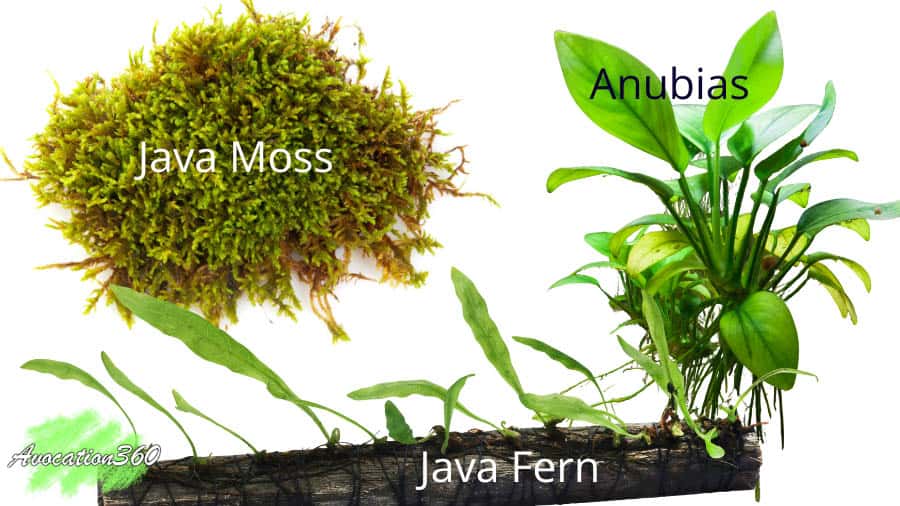
Java Moss
Java moss (Taxiphyllum barbieri) grows in dense mats of tiny, branching fronds that trap scattered eggs and prevent adults from eating them.
This plant thrives in temperatures between 59°F and 86°F (15°C to 30°C) and tolerates low light conditions that would kill other species. Java moss attaches itself to rocks, driftwood, or spawning mops without needing substrate, making it easy to move between tanks.
Christmas Moss
Christmas moss (Vesicularia montagnei) features a triangular branching pattern resembling tiny evergreen trees. The structured growth creates more surface area per square inch than java moss, providing additional egg attachment points.
This variety prefers slightly cooler water between 65°F and 77°F (18°C to 25°C) and benefits from moderate water flow to prevent debris accumulation.
Subwassertang
Subwassertang (Lomariopsis lineata) resembles a cross between moss and liverwort, growing in rounded, overlapping lobes.
Despite its delicate appearance, this plant tolerates nearly any freshwater condition and propagates by fragmentation. Small pieces break off naturally and establish new colonies throughout the tank.
Stem Plants for Fry Shelter
Guppy Grass
Guppy grass (Najas guadalupensis) earned its common name from livebearing fish breeders who discovered its effectiveness at sheltering newborns. The needle-like leaves grow densely along brittle stems that break and regrow easily.
This plant floats at the surface or roots loosely in substrate, adapting to whatever placement works for your setup. Growth rate accelerates under moderate lighting, sometimes adding several inches per week.
Hornwort
Hornwort (Ceratophyllum demersum) lacks true roots entirely, absorbing nutrients directly through whorled, needle-shaped leaves. This adaptation makes hornwort one of the most effective plants for removing dissolved waste from water.
A single stem can grow over 10 feet (3 meters) in ideal conditions, though regular trimming keeps it manageable. The dense foliage provides excellent cover for fry while simultaneously competing with algae for nutrients.
Water Sprite
Water sprite (Ceratopteris thalictroides) functions as both a floating and rooted plant depending on how you position it. The finely divided leaves resemble delicate ferns and create countless hiding spots within their structure. Plantlets develop directly on mature leaves and detach to form new plants, providing continuous propagation without effort.
Water sprite ranks among the fastest-growing aquarium plants, making it effective at nutrient export in overfed breeding tanks.
Rosette Plants for Background Cover
Amazon Sword
Amazon sword (Echinodorus sp.) develops large, blade-shaped leaves from a central crown that can reach 20 inches (50 cm) in height. The broad leaves provide spawning surfaces for egg-depositing species like angelfish and discus.
This plant requires nutrient-rich substrate and moderate lighting to reach full size. Root tabs placed near the base supply iron and other micronutrients that promote healthy leaf development.
Vallisneria
Vallisneria (Vallisneria sp.) produces long, ribbon-like leaves that sway with water movement and create natural barriers within the tank. Runners spread horizontally through the substrate, producing daughter plants that eventually form dense stands. A single vallisneria plant can populate an entire tank background within months.
The grass-like appearance provides excellent cover for bottom-dwelling fry from species like corydoras and loaches.
Rhizome Plants for Hardscape Attachment
Anubias
Anubias (Anubias sp.) grows from a thick horizontal stem called a rhizome that must remain above the substrate to prevent rot. The leathery, dark green leaves resist damage from herbivorous fish and grow slowly enough to avoid frequent trimming.
Anubias attaches firmly to rocks and driftwood using thread or aquarium-safe glue until its roots establish naturally. Low light requirements make this plant suitable for tanks without specialized lighting.
Java Fern
Java fern (Microsorum pteropus) shares the rhizome growth pattern of anubias and requires the same attachment method. The textured leaf surfaces support biofilm growth that provides grazing opportunities for fry.
Daughter plants develop on mature leaves and can be separated once roots appear. Java fern tolerates brackish conditions up to 1.009 specific gravity, making it useful for breeding certain killifish species.
Floating Plants for Surface Cover
Amazon Frogbit
Amazon frogbit (Limnobium laevigatum) floats on the water surface with round, lily-pad-shaped leaves above and trailing roots below. The root system extends several inches into the water column, creating a curtain of cover for fry near the surface.
Frogbit absorbs nutrients rapidly and can double its coverage weekly under strong lighting. Open-top tanks provide the best conditions because contact with condensation from lids causes leaf rot.
Water Lettuce
Water lettuce (Pistia stratiotes) forms rosettes of pale green, velvety leaves that float like small heads of lettuce. The feathery root system grows longer and denser than frogbit, sometimes reaching 12 inches (30 cm) in established plants.
This extensive root network provides exceptional shelter for surface-dwelling fry and captures floating debris before it sinks. Water lettuce requires strong lighting and depletes nutrients quickly, making regular fertilization necessary in heavily planted tanks.
Managing Nutrient Buildup in Breeding Tanks
Breeding tanks accumulate waste faster than community setups because fry require frequent, small feedings throughout the day. Uneaten food and increased fish waste raise ammonia and nitrate levels that can stunt growth or kill vulnerable young fish.
Fast-growing plants like hornwort, guppy grass, and water sprite export these nutrients by incorporating them into new plant tissue.
Removing plant trimmings during weekly maintenance permanently removes the absorbed nutrients from the system. This natural process supplements mechanical filtration and reduces the frequency of water changes needed to maintain safe parameters.
Combining floating plants for surface nutrient absorption with rooted plants for substrate nutrient uptake creates a balanced system that supports healthy fry development.
