
How to Breed Neon Tetras: Eggs and Fry Care
Prepare mature adults, soft acidic water, a clean spawning container, gentle egg care, and food small enough for newly free-swimming fry.
How to breed Neon Tetras starts with healthy mature fish and stable, soft, acidic water. The eggs and new fry are small, sensitive to poor water quality, and easier to raise when you prepare the spawning container and first foods before pairing the adults.
A controlled Neon Tetra spawning study used mature pairs, measured soft water at pH 5.5 to 6.5, a temperature of 25°C, a spawning brush, and tiny first foods. Those measured conditions are safer to copy than relying on clear water or a low TDS reading alone.
Neon Tetra Breeding Conditions At A Glance
- Breeders: Use healthy, well-fed adults that are at least five to six months old.
- Water: Prepare soft, acidic water and test pH, hardness, and temperature before adding fish.
- Spawning: Give the pair a clean spawning mop or fine plant cover in a dim container, then remove the adults after spawning.
- Egg care: Keep light low, protect the eggs from sudden water changes, and watch ammonia and nitrite.
- First food: Prepare rotifers, infusoria, or another food small enough for free-swimming fry, then move to baby brine shrimp as they grow.
Choosing Males And Females
The controlled spawning study found that domestic Neon Tetras reached sexual maturity at about five to six months. Do not assume every store fish is old enough or ready to spawn. Let new fish settle, confirm they are healthy, and condition mature pairs before breeding.
You will have to know which ones are male and female. Males are slightly smaller and skinnier, and their neon stripes appear straighter because of their slimmer bodies. On the other hand, the female appears a bit larger with a rounder belly, which causes her neon stripes to appear curved. A girl has got to have curves.
Once you know how many pairs you will be trying for round one, you can get your things together to start the spawning process. It is best tostart conditioning your Tetras by feeding them baby brine shrimp two or three times a day for a week or two before starting spawning. This will also help you determine males and females better, as the brine shrimp help fatten them up a bit, making the “curves” more apparent.
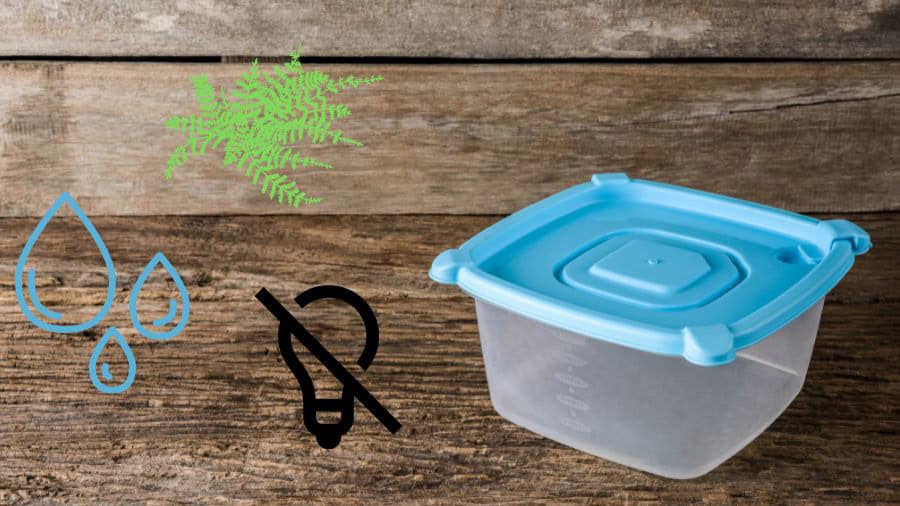
What You Need For Spawning
If you are going to have a couple of breeding pairs spawning, you can double or triple the required items listed, as the listed items would be for one breeding pair.
- A clean, food-safe spawning tub or small aquarium with a loose darker lid
- Live plants such as Java Moss, homemade spawning mop, or cleaned coco fiber
- A dim, quiet area that can stay near 24 to 26°C / 75 to 79°F
- Prepared soft water plus reliable pH, GH, KH, ammonia, and nitrite tests
Keep the spawning tub dim and shield it from direct light. A dark lid or towel can help the pair settle and protects light-sensitive eggs after spawning, but keep enough air space for gas exchange.
Add a small amount of Java moss, a sinking spawning mop, or another clean fine spawning surface. This gives the scattered eggs places to fall away from the adults.
Hold the water near 25°C / 77°F and avoid sudden changes. A pair may produce many eggs, but the number that fertilize and hatch varies with the fish and the conditions.
Do not use untested rainwater or straight reverse-osmosis water just because it has a low TDS reading. TDS does not show pH stability or identify the dissolved material. Prepare the water in advance, measure pH and hardness, and match temperature before moving the breeders. The published method used very soft water, but it still measured pH, alkalinity, and hardness.
Tub Setup And Pairing Steps
- Set out your tubs in the chosen room and add your plant selection, filling each tub halfway. Test the water’s pH levels before adding it to the tubs.
- Make sure you have sufficient coverings between tubs so the pairs don’t see each other and that you have a dark towel ready to cover them for the night.
- Grab a container filled with your chosen breeding pairs and slowly add the pairs to their tubs. Once they are in, you can place the lid over the tub to stop the Tetras from jumping out. Don’t seal the tub entirely with the lid, just enough so they can’t jump out.
- Cover the tubs with dark towels to ensure it is lovely and dark for them. Switch off lights and check in on them in the morning.
- Remove the adult Tetras in the morning and put them in their original adult tank.
After removing the Tetra breeding pairs from the containers, you will be looking for clear, translucent-looking eggs; those would be your fertilized eggs. If your eggs are milky white, they are not fertilized or older eggs that have been in the female for a while. Always cover the containers with fertilized eggs again after your inspection.
The milky unfertilized eggs you might experience initially are because the eggs are already in the female fish, and they become “old”; the more you do this spawning process, the “fresher” the eggs will be for the fertilization process. The female holds onto her eggs in the community tank because of all the other fish.
Breeding store-bought Neon Tetras can take more than one attempt. If you try another pair, prepare fresh water with the same tested temperature, pH, and hardness instead of moving fish into an unmeasured mix.
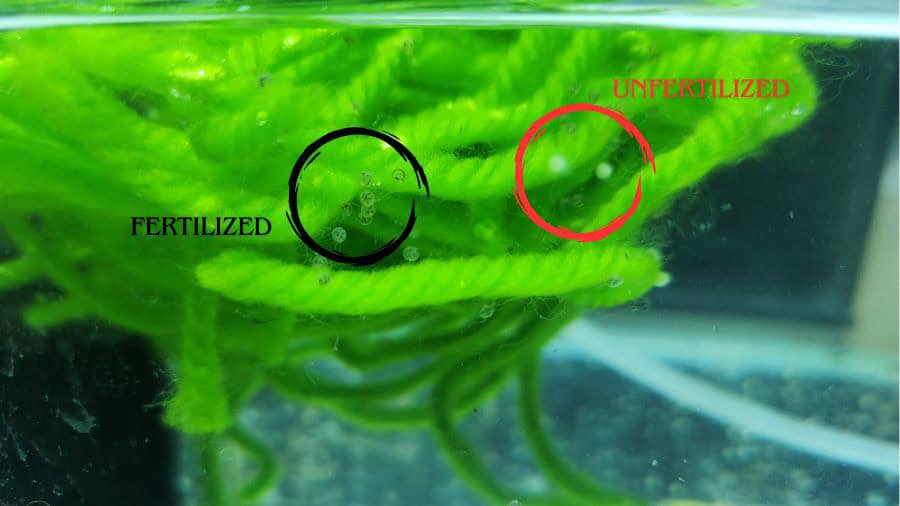
Fertilized Eggs
Once your Neon Tetras have successfully spawned fertilized eggs in their tubs and the parents are removed, here are the next steps to ensure you can feed your new Neon Tetra fry and grow them to adults. Once all the fertilized eggs have hatched, you don’t have to cover the containers anymore with a towel, but it’s best to keep the lid over for possible jumpers.
- Use a pipette or narrow airline to remove dead eggs and visible waste without pulling up fry. Replace only a small amount at a time with prepared water that matches the tub.
- Test ammonia and nitrite daily once feeding starts. Use very gentle aeration or a seasoned sponge filter when it can run without trapping or throwing the fry around.
- At 24 to 26°C / 75 to 79°F, eggs may hatch in about a day. Cooler water can slow them down. Wait until the fry are free-swimming and have used their yolk sacs before offering food.
- If you have floating plants, you can add a bit to your tubs for the babies. They love hiding in and around floating plants, encouraging them to swim around.
- Depending on the size of your fry, you can start incorporating baby brine shrimp into their diet around day nine or ten.
- When the fry are stronger, slowly adjust each water change toward the tested water in their grow-out tank instead of changing the chemistry at once.
- Move the fry only when they are feeding and swimming well and the seasoned grow-out tank matches their temperature and water chemistry.
A study of Neon Tetra egg incubation found that temperature changed both hatch time and hatch success, which is why a thermometer and steady conditions matter more than a fixed calendar day.
How Long Neon Tetra Eggs Take To Hatch
Neon Tetra eggs often hatch in about 24 hours when the tub stays near 24 to 26C / 75 to 79F.
Cooler water can delay hatching. A published Neon Tetra egg incubation study found that temperature also changed hatch success. Keep the tub dim until fry leave the plants.
After hatch, the fry rest and use their yolk sacs. Wait until they are free-swimming before you offer food.
If you add water, match temperature and pH, and change only a small amount.
What To Feed The Fry
Start feeding when the fry are free-swimming. Rotifers, infusoria, and suitable commercial liquid or powdered fry foods are easier to control than a heavy egg-yolk cloud. A small amount of green water can also keep tiny food moving through the tub.
The controlled spawning study used rotifers and boiled egg yolk as first foods. If you use yolk, mix a tiny amount with water and add only a faint cloud with a pipette. Remove leftovers and test the water because extra yolk can break down quickly in a small unfiltered tub.
Offer baby brine shrimp only when the fry can take them. Watch their bellies and remove uneaten food rather than feeding by age alone. As they grow, move them toward a varied juvenile diet in a seasoned grow-out tank.
How To Raise Neon Tetra Fry
Neon Tetra fry stay tiny for days, so leftover food and ammonia are the usual problems.
Test ammonia and nitrite every day after feeding starts. Use a pipette to lift waste, then replace it with prepared water that matches the tub.
Give them cover such as Java moss or a little floating plant so they feel safe enough to hunt.
Start with rotifers, infusoria, or a faint amount of green water, then move to baby brine shrimp when their mouths can take it.
Move them to a seasoned grow-out tank only when they swim well and the chemistry matches.

Home fish breeder sharing practical aquarium, egg-care, and fry-raising methods.
Related guides
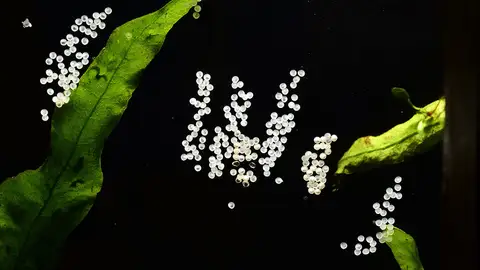
What to Do When Your Fish Lay Eggs
Identify the species, learn whether the parents guard or eat eggs, prepare a cycled nursery, and have food ready for newly free-swimming fry.
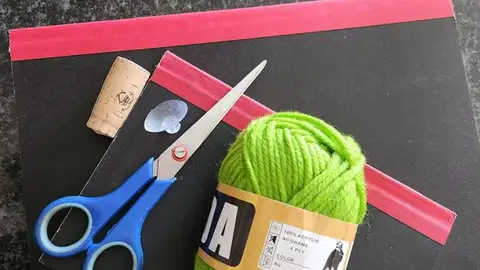
How to Make a Spawning Mop for Goldfish
Build a smooth acrylic-yarn mop for sticky goldfish eggs, using tight knots, an aquarium-safe attachment, and a safe rinse and soak before use.
My Betta Fish Laid Eggs: What to Do
Use these first steps after an accidental Betta spawn to separate the adults, protect the fry, prepare tiny foods, and keep the water stable.