
How to Make a Spawning Mop for Goldfish
Build a smooth acrylic-yarn mop for sticky goldfish eggs, using tight knots, an aquarium-safe attachment, and a safe rinse and soak before use.
Spawning mop strands imitate fine plants when you use smooth, colorfast acrylic yarn and an attachment that cannot cut, trap, or poison the fish. The loose strands give the sticky eggs of egg-scattering fish a place to attach.
The Merck Veterinary Manual describes goldfish as egg scatterers that place sticky eggs under cover. A mop helps you move some eggs to a prepared nursery, but healthy adults, correct water, and fry care still matter.
Safe Spawning Mop At A Glance
- Use new, colorfast, 100% acrylic yarn with no glitter, fragrance, or treatment.
- Make tight knots and trim loose loops that could trap a fish.
- Use aquarium-safe suction cups, a safe weight, or a purpose-made float.
- Rinse and soak the finished mop in dechlorinated water before use.
- Remove the mop after spawning if adults may eat the eggs.
Materials You Need

- Scissors
- A Book (roughly the length of your required spawning mop)
- Optional: an aquarium-safe float made for aquatic use
- Optional: Silicone suction cups (if you wish to suction your mop to the side of the tank)
Do not improvise with Styrofoam, bubble wrap, pool noodles, painted objects, metal clips, or a used wine cork. These items may break apart, trap waste, carry residues, or expose fish to sharp edges. A plain aquarium-safe suction cup is the simplest attachment.
Build Steps For Floating, Bottom, Or Side Mops
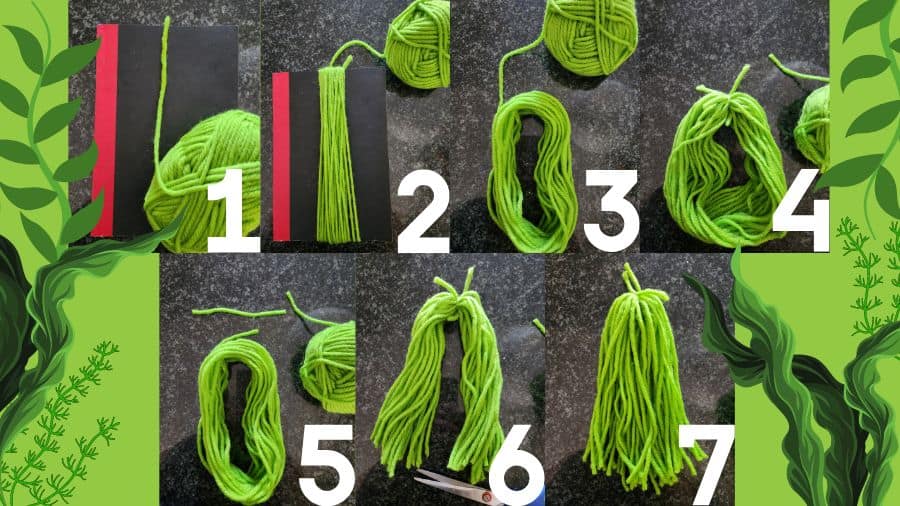
First, you need to choose the length of the mop you require. I used a medium-sized book as I needed about that length of mop. You can use a longer book if you need a longer mop length. The nice thing about the yarn mop is that you can always trim it to your desired length afterward. You can now place your yarn over the book in the direction you will be going around in.
Step two: You will now wrap your yarn around the chosen length of the book. In the picture above, I wrapped the yarn around 30 times. You can do up to 50 wraps if you require a denser mop.
Steps three through five: I then remove the wrapped yarn from the book and cut it from the rest of the yarn. I cut an additional piece of yarn to tie the top section together. Making a tight double knot is best, as the yarn quickly pulls apart if not tied together correctly.
Steps six and seven: Cut the loop on the end opposite the knot. Trim the strands to the needed length and remove any small loose pieces. Rinse the mop thoroughly, then soak it in dechlorinated water and check for dye, odor, or fraying. Do not use soap, detergent, or boiling water unless the yarn maker confirms that the material and dye are safe at that temperature.
Different Mop Styles
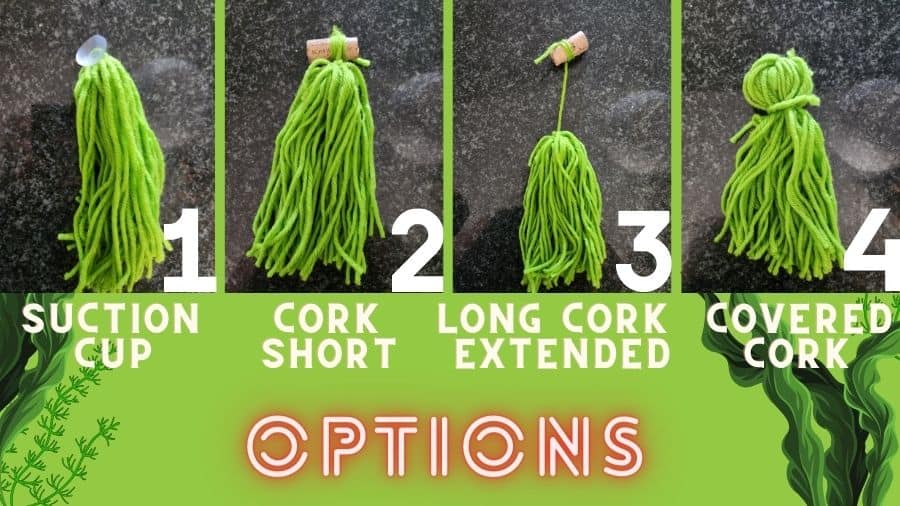
The suction cup mop would anchor your spawning mop to the side of the tank. You can cut off an additional piece of yarn to secure the suction cup to your newly made spawning mop.
A floating mop can sit near the surface when it is attached to a purpose-made aquarium-safe float. Secure every knot and inspect the float before each use.
A midwater mop uses an aquarium-safe float and a longer section of yarn. It does not replace a fitted tank lid, which is the reliable way to prevent jumping.
Another option is the bottom-laying spawning mop. You can add the basic mop to the tank, which will lay on your substrate. This is an excellent option for goldfish, as they tend to move along the bottom when spawning.
How To Place And Check The Mop
Put the mop where the pair already likes to swim. Goldfish often lay eggs near plants or along the bottom, so a side or bottom mop matches that behavior.
Leave open water around the mop so the pair can swim freely.
Lift the mop slowly. Move it into a prepared nursery with matched, treated water.
Look over the strands before you add the mop and after you lift it. Cut any new loops.
When The Mop Is Ready To Reuse
Rinse the used mop in dechlorinated water after you move fry. Soak it until no film or odor remains.
Dry it fully if you will store it. Keep it with aquarium tools only, never with household cleaners.
Make a new mop if knots loosen or strands tangle into a net.
University of Florida IFAS describes goldfish as scatterers of adhesive eggs on plants.
Home fish breeder sharing practical aquarium, egg-care, and fry-raising methods.
Related guides
How to Breed Neon Tetras: Eggs and Fry Care
Prepare mature adults, soft acidic water, a clean spawning container, gentle egg care, and food small enough for newly free-swimming fry.
What to Do When Your Fish Lay Eggs
Identify the species, learn whether the parents guard or eat eggs, prepare a cycled nursery, and have food ready for newly free-swimming fry.
My Betta Fish Laid Eggs: What to Do
Use these first steps after an accidental Betta spawn to separate the adults, protect the fry, prepare tiny foods, and keep the water stable.