
What to Do When Your Fish Lay Eggs
Identify the species, learn whether the parents guard or eat eggs, prepare a cycled nursery, and have food ready for newly free-swimming fry.
What to do when your fish lay eggs depends on the species. First identify the parents, decide whether they guard or eat eggs, and prepare water and food that match the needs of their fry.
The Merck Veterinary Manual guide to fish reproduction explains that egg layers use different strategies. Bettas guard bubble nests, while goldfish scatter sticky eggs and may eat them. The personal example below follows an accidental goldfish spawn.
If the eggs you found are above the waterline in a pink cluster, you are probably looking at a mystery or apple snail clutch instead of fish eggs. In that case, start with this Mystery snail egg care guide.
Fish Egg Care At A Glance
- Identify the species and its spawning method before moving eggs.
- Separate egg-scattering adults if they are likely to eat the eggs.
- Use a cycled nursery with gentle flow, stable temperature, and protected intakes.
- Remove dead eggs carefully and watch healthy eggs for normal development.
- Prepare food small enough for the fry before they become free-swimming.
Do Fish Lay Eggs
Do fish lay eggs? Many aquarium species do. Egg layers release eggs outside the body, then the male fertilizes them. Livebearers such as guppies, platies, and mollies give birth to free-swimming fry instead. The Merck guide linked above groups egg layers by how they spawn, including scatterers, nest builders, and mouthbrooders.
If you never saw a spawn, you can still guess from what you keep. Goldfish scatter sticky eggs on plants and moss. Bettas and some gouramis use a bubble nest at the surface. Cichlids may guard a chosen leaf, rock, or pit. Match your next step to that method, not to a generic fish-eggs routine.
Fish Eggs In The Tank
Fish eggs in a tank are usually small, round, and either clear, amber, or slightly yellow. They may stick to plants, rest on the glass, sit in a bubble nest, or drift in moss. White, fuzzy eggs are often dead or fungus-covered. Healthy eggs often stay translucent until eyes show.
A pink or cream cluster above the water is not a fish spawn. That is a snail clutch. For those, use the Mystery Snail guide linked earlier. Do not scrape every spot on the glass until you know which animal laid it.
What To Do With Fish Eggs In The Tank
What to do with fish eggs in the tank starts with the parents. If the species guards a nest, keep the water still, dim the lights a little, and remove tank mates that will eat eggs. Do not tear a bubble nest apart to clean it. If the species scatters eggs and then eats them, move either the adults or the egg-covered plants into a cycled nursery.
Leave fertilized eggs attached when you can. Pulling them off moss or glass can crush them. Remove obviously white eggs if you can lift them without harming the rest. Do not add a dye, tonic, or antifungal as a habit unless a veterinarian or a label for that species and life stage says to use it.
If you cannot house fry, it is honest to leave the spawn in a community tank knowing many eggs will be eaten. That is kinder than dumping fry or raising more fish than you can feed. Never release aquarium fish or eggs into local water.
When A Betta Guards A Bubble Nest
If a male betta has a foamy nest and you also have a female in the same aquarium, watch closely. After a real spawn he may pick eggs up and spit them into the nest. Move the female out once laying stops so he does not injure her. Keep the lid on, cut surface agitation, and let him tend the nest unless he starts eating the eggs.
A nest with no female and no eggs is only practice. You do not need to save empty bubbles. If you did not plan to breed, house males and females apart.
I began keeping goldfish with three fish, then later added a Lionhead. The spawning described here happened unexpectedly.
How the egg-laying process started
I started to notice the Fantail’s belly getting larger, but I thought maybe she was eating a lot. A few days later, I noticed she was being chased by the new addition and one of the Black Moors (now I know these two are boys, but at the time, I didn’t know this fun fact).
I inspected with curiosity as I had never had bullying issues, and I soon understood what was happening. The Fantail was ready to lay eggs, and the boys were helping her by bumping her bottom to release the eggs and then fertilizing them.
This instilled panic in me, as I had no backup tank or set-up to separate the eggs from the rest of the fish. I also had no idea what I was doing, which added to the stress.
What I Bought / What You Need
I quickly went to my local pet store and got the following items:
- A small mesh breeder (the boys were chasing my pregnant fish all over town, so I used this to help her take a break from the guys)
- A small glass tank (where I would grow the babies/fry)
- A sponge filter (because it won’t suck the tiny fry babies in and hurt or trap them)
- A tiny air pump (used to power the sponge filter)
- A splitter connection
- Additional pipe (make sure it will fit over your pump connection and new filter (mine was all for a 4mm)
- And a small air stone (this will ensure a good oxygen supply)
- I would suggest you get Java Moss or some plant for the future. I luckily had this in my tank at the time, and it was easier to remove the eggs because they were laid in the moss. The new fry babies also like to hide in it.
What I Did After The Eggs Were Laid
The Fantail and the Black Moor did something (wink, wink) in the Java Moss, so I was sure some eggs were fertilized.
I separated the Fantail so she could recover from the chase, then moved the Java Moss with attached eggs into a nursery with an air stone and fry-safe filter. If the female appears injured, weak, unable to swim normally, or continues to be chased, keep her separate and contact an aquatic veterinarian.
I matched the nursery water to the main aquarium. Old tank water alone does not cycle a new filter, so use mature media from a known healthy aquarium or prepare a cycled sponge filter in advance. Keep adult goldfish away because egg scatterers may eat their eggs and fry.
Keep checking on the eggs. In a day or two, you will notice some of them turning white. These eggs aren’t fertilized and should be removed if possible.
Some people say it’s OK to leave them in, but I prefer to remove them for the safety of the fertilized eggs. After removing the unfertilized eggs, I was left with eleven fertilized eggs (all eleven hatched).
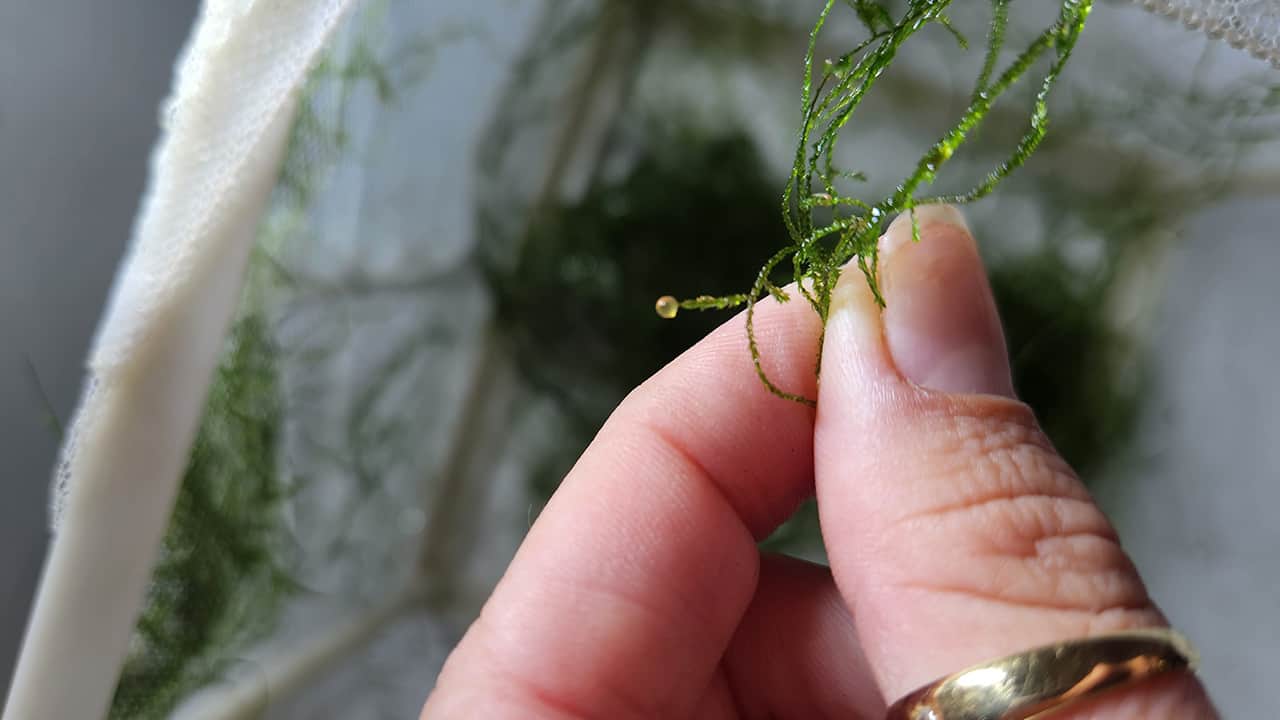
The fertilized eggs will either be translucent or have a yellow tint. After a few days, you will start seeing black dots form in these eggs. These are the new baby fry growing.
Goldfish eggs often hatch within several days, but timing changes with temperature and development. Do not raise the temperature just to force faster hatching. Keep it stable within the safe range for the parents.
Tiny fry emerges from their eggs, sometimes looking translucent, so I used a light to see them in the tank. Their eyes give off a little shine that helps you spot them better, but seeing them in the first few weeks isn’t easy.
What To Feed The Fry
Newly hatched fry first use their yolk sac. Start feeding when they become free-swimming, using a commercial fry food or live food small enough for their mouths. Infusoria or green water may suit the smallest fry, followed by newly hatched brine shrimp or finely powdered food as they grow.
Feed tiny portions several times only if you can keep the water clean. Remove uneaten food and use growth and mouth size, not a fixed number of days, to decide when to offer larger foods.
How Often To Clean The Water
Test ammonia, nitrite, nitrate, temperature, and pH often. Change enough water to keep the nursery safe, using dechlorinated water that closely matches the temperature and other important values. A thin airline can remove waste without creating a strong current, but protect the end so fry are not siphoned out.
Do not add a tonic or medicine as routine prevention. Use treatment only for a diagnosed problem and follow advice from an aquatic veterinarian or a product label that covers the species and life stage.
Rinse a dirty sponge gently in water removed from the aquarium, not untreated tap water. Do not clean it on a schedule if the flow remains good, and never replace all mature filter media at once.
What The Baby Fish Will Look Like
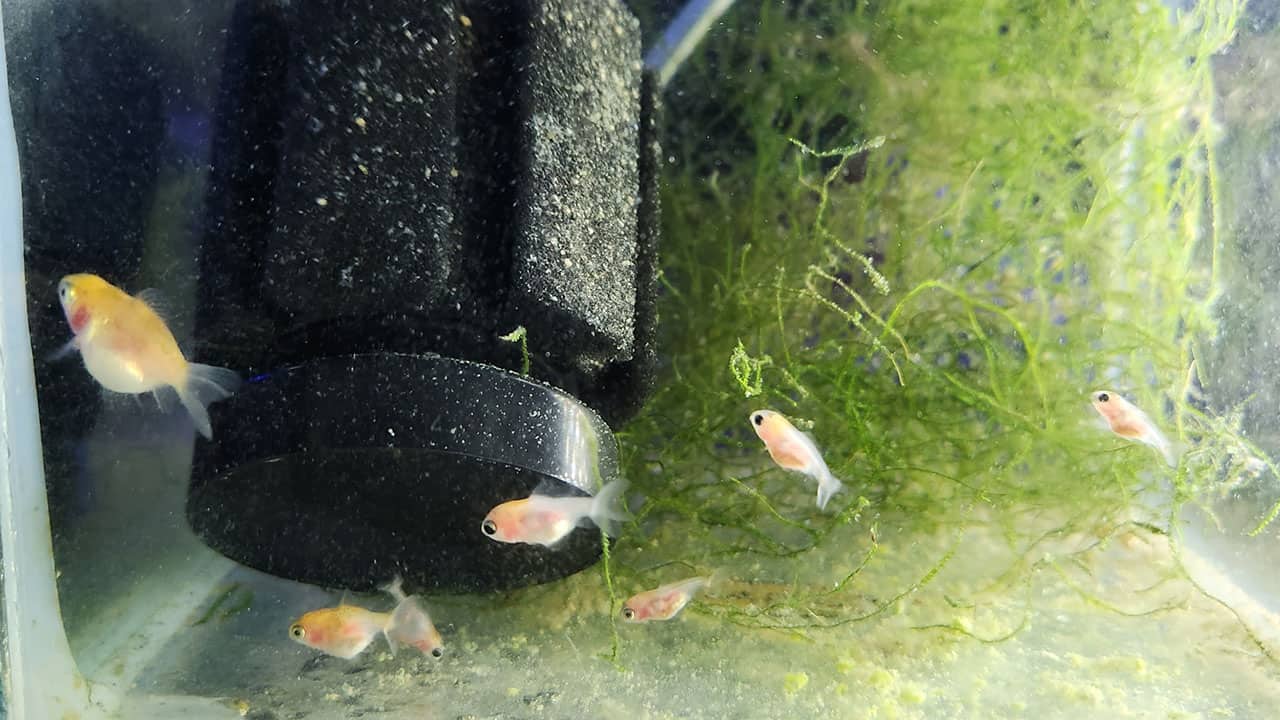
I couldn’t find any information on this question. I am still very curious to know, as my baby fish are only a few months old now.
I will update this post to show progress as the months pass, but I have seen some strange things. The one fish baby looks like it was born a month before the others, where they are only a day apart.
One baby with two different eye colors might be my favorite at this stage. One eye looks just like the mom Fantail’s eye (black), and the other is beautiful silver (at this stage). I am not sure how the eyes will still change.

Home fish breeder sharing practical aquarium, egg-care, and fry-raising methods.
Related guides
How to Breed Neon Tetras: Eggs and Fry Care
Prepare mature adults, soft acidic water, a clean spawning container, gentle egg care, and food small enough for newly free-swimming fry.
How to Make a Spawning Mop for Goldfish
Build a smooth acrylic-yarn mop for sticky goldfish eggs, using tight knots, an aquarium-safe attachment, and a safe rinse and soak before use.
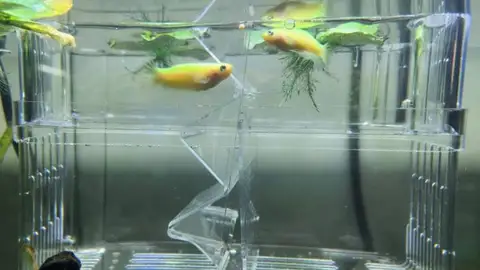
My Betta Fish Laid Eggs: What to Do
Use these first steps after an accidental Betta spawn to separate the adults, protect the fry, prepare tiny foods, and keep the water stable.