
How to Make a Snello Recipe
I make Snello as a soft supplemental food for aquarium snails. Here is a simple vegetable mix, safe ingredient guidance, and clear freezing and feeding steps.
How to make a Snello recipe starts with fresh unseasoned vegetables, a familiar aquarium food, and a plain binder. Snello is a soft supplemental food, not a parasite treatment or a complete fix for shell damage. Test the water and check the needs of your snail species as well as its diet.
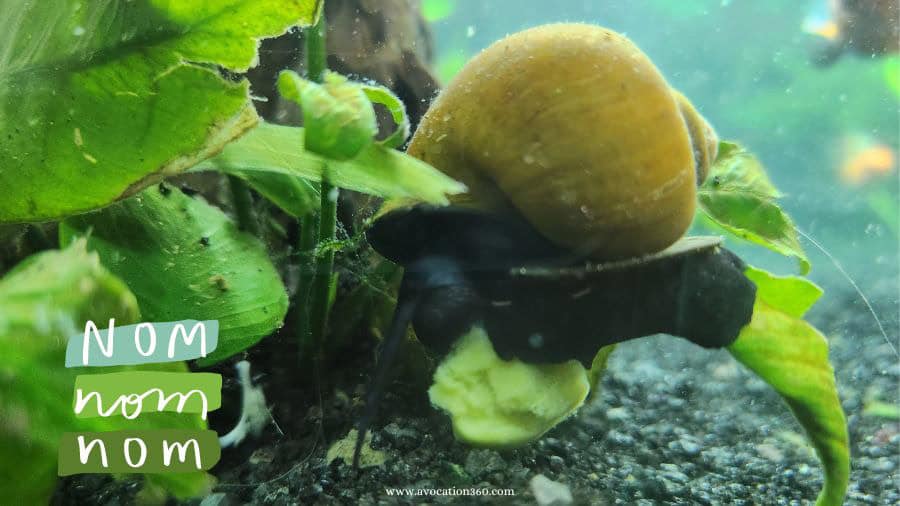
I first made it while preparing for a cluster of Mystery Snail eggs. A small batch is easy to portion and freeze, but the recipe should stay simple enough that you know exactly what is going into the aquarium.
A Safer Snello Formula
- Use fresh vegetables with no salt, seasoning, sauce, mold, or spoiled areas.
- Add a small amount of a complete fish, shrimp, or snail food that your livestock already tolerates.
- Use plain unflavored gelatin or agar to bind the mixture.
- Do not add flavored antacids, human medicines, sweeteners, or supplements with an unclear ingredient list.
- Feed a small cube, remove leftovers before they foul the water, and keep Snello as one part of a varied diet.
What Is This Snail Food?
Snello is a homemade gel food for aquarium snails and other omnivorous invertebrates. Make a small batch, label it, and discard any portion that smells wrong, changes color, or shows freezer damage.
Check the natural diet of your freshwater snail species before feeding it. In a community tank, offer one small piece where the snails can reach it, watch which animals eat it, and remove what remains.
This matters even more if your snails share a tank with goldfish.
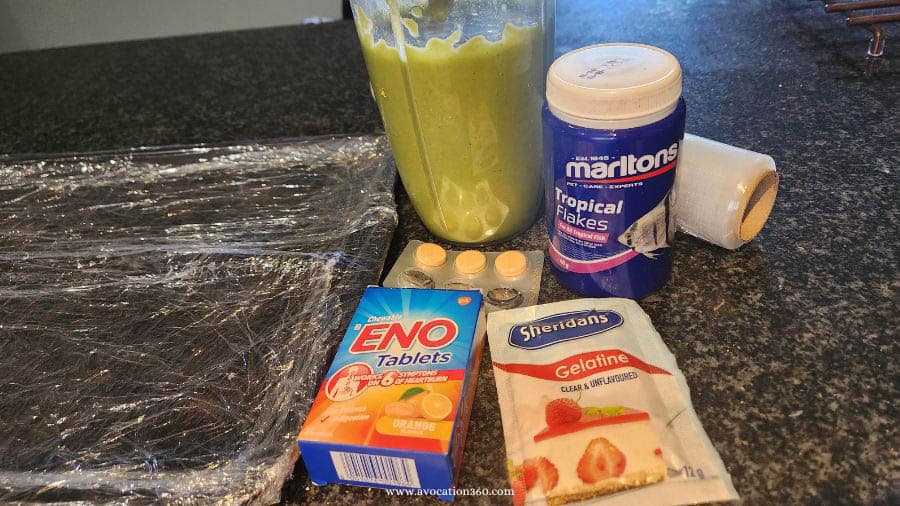
Ingredients To Use
Vegetables
Use fresh green vegetables, sweet potato, or carrot. Unsalted canned vegetables can work after draining and rinsing. Plain baby food is another option, but read the label and avoid added salt, onion, seasoning, sweeteners, or preservatives that you would not normally add to the aquarium.
- Spinach
- Lettuce
- Green beans
- Peas
- Kale or collard greens
- Zucchini
Steam fresh vegetables until soft enough to blend. Drain and rinse canned vegetables. Never use spoiled produce because blending and freezing do not make spoiled food safe.
Garlic
Do not use garlic in Snello as a parasite treatment. Research on garlic in aquatic animals uses specific preparations, doses, species, parasites, and delivery methods. A clove blended into snail food is not the same treatment and should not be presented as one.
Calcium
Shell condition depends on diet and water chemistry. Do not guess at a calcium dose or crush flavored human tablets into aquarium food. If you use a calcium product, choose one made for aquatic invertebrates and follow its label for the exact species and amount. Skip any product with medicines, flavors, sweeteners, or an unclear ingredient list.
Protein
Many people add a bit of frozen protein to the mix. It is unnecessary, but it can definitely be added if you have it on hand for extra nutrition. Popular protein options include frozen bloodworms, ground krill, cooked fish, and eggs.
Fish Flakes
Fish flakes or crushed pellets can add protein and other nutrients. Use a complete aquarium food that your livestock already eats, and keep the amount small so the recipe remains mostly vegetables.
Gelatin Powder
Gelatin powder is the key to making the jello come alive. Some people prefer to use agar agar powder to help set the ingredients because it does not come from animals.
Additional Supplements
Extra powders and liquid supplements are usually unnecessary in a mixed homemade recipe. Add a supplement only when its label covers your species and gives a clear food dose.
Fruit
Fruit adds sugar and is not needed. If you include it, use only a small amount and remove uneaten food promptly.
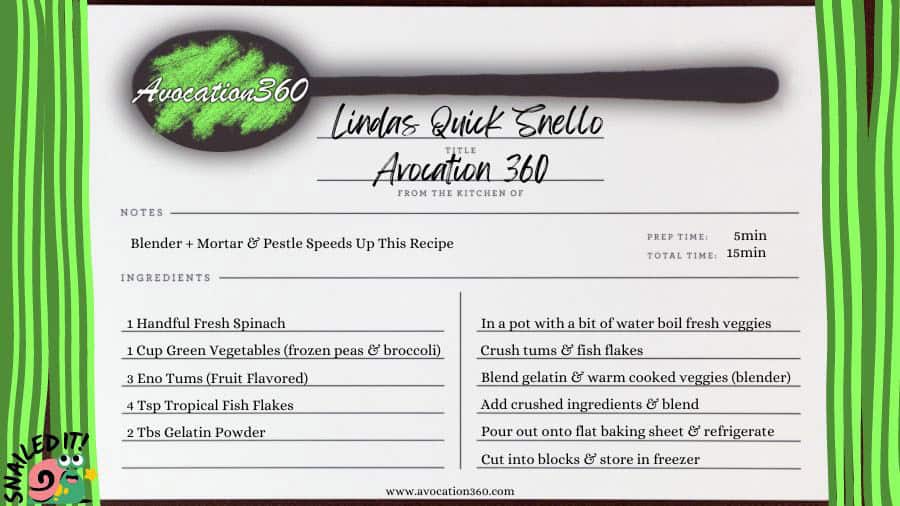
Recipe Options
Recipe One: Throw Together What You Have
Materials Needed
- Blender
- Pot
- Ziploc bag or mortar and pestle
- Cling film
- Sheet pan
- Baking paper
- Freezer-safe storage container
Ingredients
- 1 handful fresh spinach, or another leafy green
- 1 cup other green vegetables, such as 1/2 cup frozen broccoli and 1/2 cup frozen peas
- 4 tsp tropical fish flakes, or any flakes you have available
- 2 tbs gelatin powder
Method
- Cook the vegetables in a pot with a little water until they are soft enough to blend.
- Crush the fish flakes in a bag, or use a mortar and pestle.
- Add the hot vegetables and water from the pot straight into the blender.
- Add the gelatin powder and other dry ingredients, then blend until smooth.
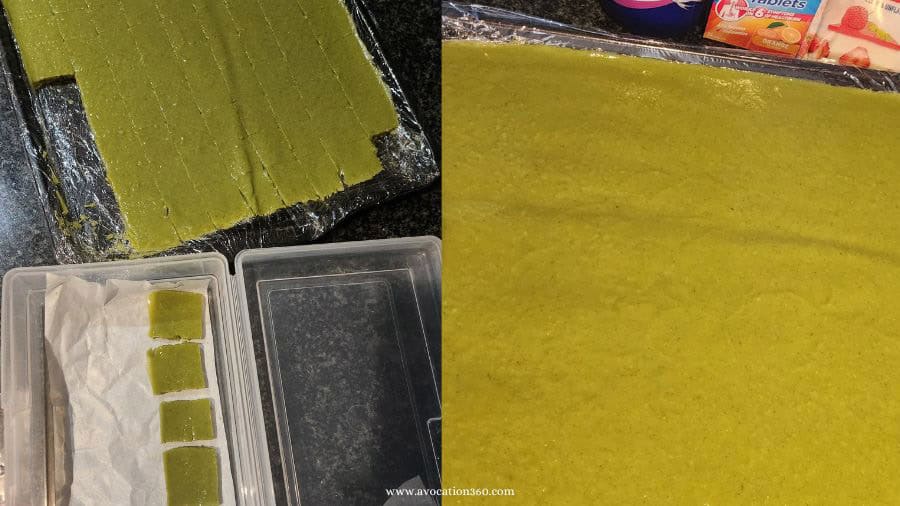
- Wrap a sheet pan with cling film and pour the mixture into the pan.
- Tap the pan to remove bubbles, refrigerate until set, cut into cubes, and store in the freezer.
Tip: Use baking paper between layers when storing your Snello cubes in the freezer.
The key to Linda’s quick Snello recipe is to have everything hot enough in the blender for the gelatin to activate, so make sure to add the gelatin while the mixture is still nice and hot.
Below, I will add some additional recipes for you that include alternative ingredients as well as some protein. This will help you understand how and with what you can alter your own recipes and find out what suits you best.
Recipe Two: Baby Food Snello
Materials Needed
- Microwave-safe bowl
- Ziploc bag or mortar and pestle
- Container with a flat bottom
- Freezer-safe storage container
Ingredients
- 2 jars green vegetable baby food, such as spinach, zucchini, and peas
- 2 tbs fish flakes
- 1 packet unflavoured gelatin powder
Method
- Empty the baby food into a microwave-safe bowl and heat until hot, stirring regularly.
- Crush the fish flakes in a bag, or use a mortar and pestle.
- Slowly add the gelatin powder to the hot baby food while stirring to avoid lumps.
- Add the crushed fish flakes, then stir until combined.
- Pour the mixture into a flat-bottom container and refrigerate until set.
- Cut into cubes and store in the freezer.
Tip: You can add frozen Snello directly into your fish tank.
Recipe Three: Bulk It Up
This recipe makes about 4 cups of Snello.
Materials Needed
- Blender
- Pot
- Sheet pan
- Baking paper or parchment paper
- Ziploc freezer bag
Ingredients
- 1 cup spinach, lettuce, kale, or collard greens
- 1 1/4 cups diced sweet potatoes or carrots
- 1 1/2 tins unsalted canned green beans or peas, drained
- 3 tbs ground krill or frozen bloodworm
- 3 tbs fish flakes or crushed carnivorous fish pellets
- 2 tsp spirulina or kelp powder
- 4 tbs gelatin powder
Method
- Steam the vegetables in a pot until they are soft enough to blend.
- Crush the fish flakes, then mix them with the spirulina or kelp powder in a bowl.
- Add the hot vegetables and a small amount of water from the pot into the blender.
- Add the remaining ingredients to the blender, then blend until smooth.
- Transfer the mixture to a pot over medium heat and stir until steamy but not bubbling.
- Remove from heat, pour into the lined sheet pan, and place in the freezer to set.
- Cut into cubes once set, freeze overnight, and place the frozen cubes in a Ziploc bag for easy storage.
Tip: Keep the mixture on the thicker side in the blender to help it set properly. Do not add too much water.
Recipe Four: Fresh Fruit And Veggies
Materials Needed
- Blender
- Cling film
- Sheet pan
- Baking paper
- Freezer-safe storage container
Ingredients
- Fruit: 1/4 apple, 1/4 pear, 1 strawberry, and 1/2 banana
- Vegetables: 4 green beans, 1/2 medium carrot, 1 inch slice zucchini, 1 broccoli floret, 1/2 inch slice sweet potato, and 1 handful lettuce
- 2 tsp spirulina powder
- 1 tbs frozen bloodworms
- 1 1/2 packets gelatin powder
Method
- Cook the vegetables in a pot with some water until they are soft enough to blend.
- Add the hot vegetables and some of the water from the pot into the blender.
- Add the bloodworms, fruit, spirulina, and gelatin, then blend until smooth.
- If the mixture is too cold, warm it in a pot to make sure the gelatin dissolves properly.
- Wrap a sheet pan with cling film and pour the mixture onto it.
- Tap to remove bubbles, refrigerate until set, cut into cubes, and store in the freezer.
Tip: Use baking paper between layers when storing your Snello in the freezer.
Snail Jello Recipe
A snail jello recipe is the same homemade gel food many keepers call Snello. Unflavored gelatin or agar holds cooked vegetables and a little aquarium food in a cube that snails can graze. University of Florida Extension describes a similar gelatin-based homemade fish feed that is mixed hot, poured into a pan, chilled, cut, and frozen.
Keep the mix mostly vegetables. Heat it enough for the gelatin to dissolve. Pour a thin layer so cubes freeze evenly. Feed one small piece at a time and remove leftovers before they break down in the water.
How to Store Snello
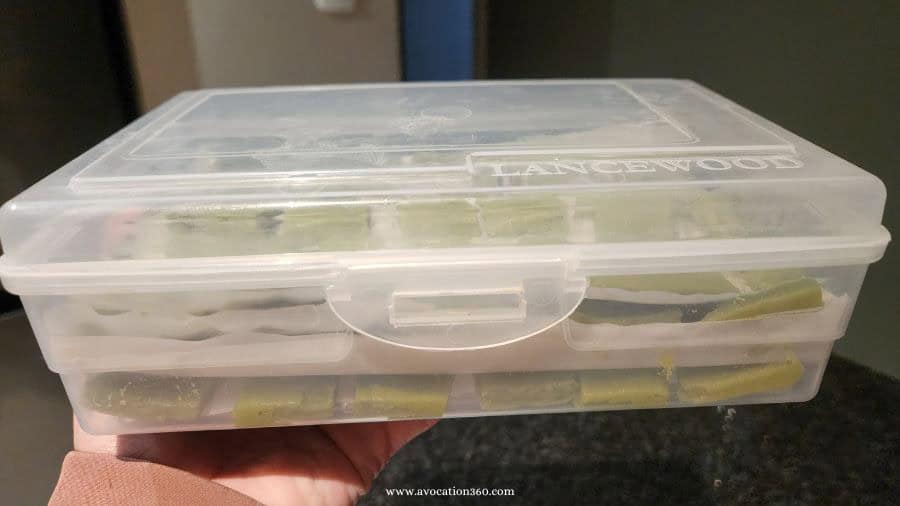
Store set cubes in a freezer-safe container with baking paper between layers. Label the date. Use frozen cubes within a few weeks for best quality, and throw out any piece that smells sour, turns an odd color, or shows freezer burn. You can drop a frozen cube into the tank, but still remove what the snails do not eat.
Keep thawed Snello in the refrigerator only for a short time. Do not leave a wet container of cubes at room temperature. Do not refreeze cubes that sat out in tank water.

Home fish breeder sharing practical aquarium, egg-care, and fry-raising methods.
Related guides
How to Make Green Water Culture for Fish Fry
Start a separate green-water culture with dechlorinated water, steady light, gentle aeration, and measured nutrients, then harvest it safely for fry.
How to Culture Tubifex Worms
Build and maintain a separate recirculating Tubifex culture, feed it lightly, harvest cleanly, and reduce the risk of transferring pathogens to fish.
Mystery Snail Laid Eggs: What to Do
Decide whether to hatch or remove a Mystery Snail egg clutch, then manage humidity, incubation, hatchlings, and the number of snails you can keep.