
Peaceful Betta Tank Mates for Small Aquariums
See when one Betta should live alone, when a snail or shrimp may work, and why schooling fish and social bottom dwellers need a larger aquarium.
Peaceful Betta tank mates for small aquariums are limited. A 5-gallon tank is best treated as a home for one Betta, while a 10-gallon tank may support a snail or shrimp if the individual Betta leaves them alone.
Betta behavior varies, and no companion is guaranteed to be safe. Research on aggression and social behavior in domestic Bettas shows that social responses differ with context and the individual. Choose companions by adult size, group needs, water requirements, and temperament, then keep a separate setup ready.
Betta Compatibility At A Glance
- 5 gallons: One Betta. Plants and hardscape provide safer interest than another fish.
- 10 gallons: One Betta, with a possible snail or shrimp only if space, filtration, and behavior allow.
- 20 gallons or more: A carefully chosen school or bottom-dwelling group may work after all species needs are checked.
- Every size: Use cover and sight breaks, quarantine new animals, watch feeding, and separate at the first sign of ongoing stress.
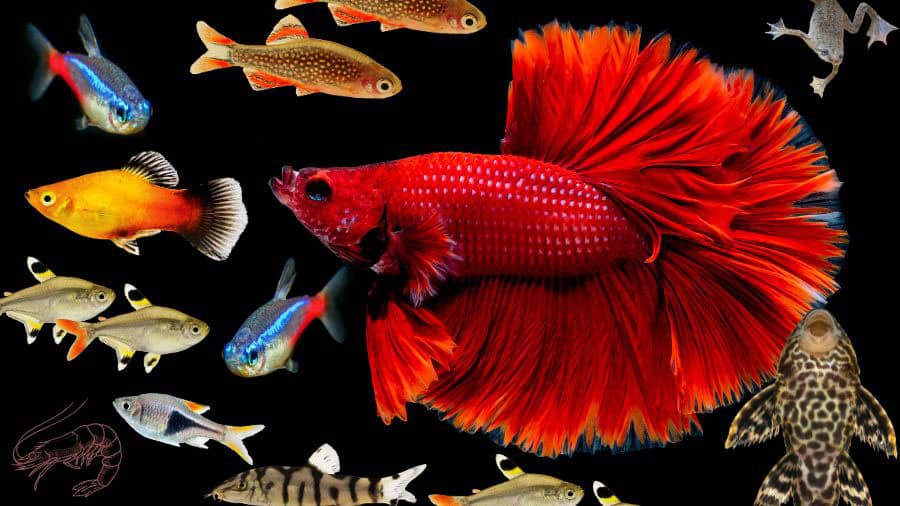
Live plants and other smooth cover help break lines of sight, but they cannot make an overcrowded or incompatible mix safe.
What Makes a Peaceful Companion
Before picking species from any list, think about the type of tank mate that suits a Betta.
Good tank mates usually:
- Prefer similar warm temperatures
- Are peaceful and non territorial
- Do not resemble a male Betta
- Do not nip long flowing fins
- Occupy different areas of the tank, such as the bottom or mid level
- Are fast enough to move away if chased, but not so fast that they constantly outcompete the Betta for food
A planted tank with plenty of hiding spots, caves, and line of sight breaks is almost essential for a calm Betta community. Live or artificial plants both work, as long as they give fish places to rest and retreat.
Suitable Species
Every Betta has its own personality. Some will happily ignore tank mates, while others will not tolerate anything that moves. Always introduce new tank mates slowly, watch closely over the first few days, and be ready with a spare tank or divider if it does not work out.
Below is a guide to common options and how many of each to keep, assuming you have enough tank volume and filtration to support a community.
Tetras
Suggested group size: 10 to 12 in a suitable tank size
Tetras are schooling fish that feel safest in larger groups. They do best in longer tanks where they can swim together.
Good options include:
- Ember tetra
- Neon tetra
- Green neon tetra
- Lemon tetra
- Silvertip tetra
- Ruby tetra
- Purple tetra
Tetras work best in larger Betta community tanks rather than very small aquariums. For most of these, aim for at least a well planted 20 to 30 gallon tank so the school and the Betta all have space.
Rasboras
Suggested group size: 8 to 10
Rasboras are another peaceful schooling group that often pair well with Bettas when given enough room.
Popular choices:
- Harlequin rasbora
- Chili rasbora
- Kubotai rasbora
- Neon green rasbora
- Neon blue rasbora
- Neon red rasbora
- Espei rasbora or lambchop rasbora
Even small rasboras need a proper group and horizontal swimming room. I would reserve a Betta and rasbora community for a planted 20-gallon tank or larger after checking the chosen species.
Danios
Suggested group size: 10 to 12
Danios are active and quick, so they need space and usually prefer cooler water than Bettas. The smaller species below are sometimes kept with Bettas in larger setups.
Examples:
- Celestial pearl danio
- Gold ring danio or Danio tinwini
They are better choices for longer community tanks where they can school and move around without constantly zipping past the Betta in a tiny space.
Catfish
Suggested group size: Follow the needs of the exact species. Corydoras and Otocinclus are social and should not be kept alone or as a pair.
Bottom dwelling catfish are often some of the easiest Betta companions, since they usually stay out of the Betta’s way.
Options include:
- Corydoras julii
- Bronze corydoras
- Panda corydoras
- Other small Corydoras species
- Otocinclus or dwarf suckers
- Bristlenose pleco
- Whiptail catfish or twig catfish
Corydoras and Otocinclus need groups, mature tanks, and species-appropriate food. A group of small Corydoras may suit a 20 to 30 gallon Betta community. Otocinclus need an established grazing supply. Bristlenose plecos and whiptails need more room and produce more waste, so they do not belong in a small Betta tank.
Gudgeons
Suggested group size: 2 to 8
Gudgeons can be colorful, interesting bottom or mid level fish.
Example:
- Peacock gudgeon or peacock goby
They generally need stable water conditions and a tank with many caves and hiding spots. They are more suited to larger planted community tanks alongside a Betta.
Kuhli Loaches
Kuhli loaches are social bottom dwellers that need a group, a mature aquarium, soft hiding places, and more floor space than a small Betta tank provides. They may suit a larger planted community, but clown, yoyo, and zebra loaches are not small-aquarium recommendations.
Platies
Suggested group size: 3 to 6
Platies are hardy, colorful livebearers.
Some varieties you might see:
- Panda platy
- Mickey mouse platy
- Rainbow platy
- Gold platy
- Sunset platy
- Tuxedo platy
They are usually peaceful and active in the mid to upper levels. They are better suited to medium sized community tanks, as they are quite active and also breed easily, which can lead to fast stocking increases in a small aquarium.
Invertebrates: Snails
Suggested number: 1 to 5 depending on tank size
Snails can be excellent tank mates for Bettas, especially in smaller aquariums where extra fish are not a good idea.
Common snail choices:
- Mystery snail
- Nerite snail
- Malaysian trumpet snail
Snails may eat some algae or leftover food, but they also produce waste and still need their own food. Nerite eggs do not complete their life cycle in ordinary freshwater, so the population will not multiply there. A Mystery Snail grows larger and adds a noticeable waste load. Watch for Betta nipping and provide a separate home if the snail stays closed or loses tentacle tissue.
Invertebrates: Shrimp
Suggested number: Base the colony on tank size and filtration, and expect some Bettas to hunt them.
Shrimp can work with some Bettas, but it is very individual. Some Bettas ignore shrimp, while others consider them snacks. Dense planting and many hiding places improve the shrimp’s chances.
Options include:
- Cherry shrimp
- Amano shrimp
- Bamboo shrimp
- Ghost shrimp
Cherry and ghost shrimp are more likely to be hunted, so keep that in mind. Amano shrimp grow larger and can sometimes do a bit better with Bettas, especially when the tank has plenty of cover.
African Dwarf Frogs
I would not use African Dwarf Frogs as a general Betta tank mate. They are slow eaters, must surface to breathe, and can miss meals or be harassed in a fish community. A species-focused setup makes their feeding and health easier to monitor.
Species To Avoid
Some fish that look fine in the store can cause serious problems in a Betta tank.
Try to avoid:
- Fin nippers that will bite at the Betta’s long fins
- Any fish with long flowing tails or bright colors that resemble a male Betta
- Fast, hyperactive fish that constantly outcompete the Betta for food
- Very large or aggressive species that can bully or injure a Betta
- Multiple male Bettas in one tank
A bare tank with no plants or decor is also risky. Without cover, tank mates cannot escape if the Betta decides to chase them.
Can A Male And Female Live Together
No. A male and female Betta should not share a normal long-term aquarium. They may be brought together under a planned breeding protocol, with close supervision and separate homes ready. If you have short-fin Bettas, make sure you can tell a Plakat male from a female.
In most cases:
- A male and female Betta are only kept together temporarily for breeding
- Stress and aggression are common if they are housed together long term
- The female often ends up hiding in a corner or behind plants, showing clear signs of stress
Breeding is not a compatibility test. Separate the pair according to a species-specific breeding plan, and do not leave an injured or exhausted fish exposed to further chasing.
For most Betta owners, it is safer to keep one Betta per tank and add community species only when the tank has enough room for their full group and the individual Betta remains calm.
What Size Setup Do I Need?
Tank size is one of the most important parts of making Betta tank mates work.
- 5 gallon tank, about 18.9 liters: Best for a single Betta. Plants and smooth decor add cover without adding another animal’s waste or space needs.
- 10 gallon tank, about 37.8 liters: Keep one Betta. A snail or shrimp may work if the Betta ignores it and the filter can support the added waste. Do not add a partial school of fish or social bottom dwellers.
- 20 to 30 gallons, about 75.7 to 113.5 liters, or larger: This range gives a full school or bottom-dwelling group more room. Choose one compatible group at a time and test the water after each addition.
As you add more tank mates, focus on:
- Stable water parameters
- Regular water changes
- Good filtration with gentle flow, since Bettas do not enjoy strong currents
For very small aquariums, the safest and most peaceful companions are usually plants, a few shrimp, or a single snail. As the tank size increases, you can start introducing carefully chosen fish that match your Betta’s temperament and your available space.

Home fish breeder sharing practical aquarium, egg-care, and fry-raising methods.
Related guides
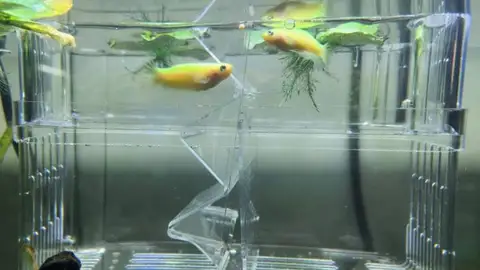
Plakat Betta Male vs Female: Identification Guide
A clear checklist to tell male vs female plakat bettas using ventral fins, the beard when flaring, the egg spot, and a few behavior clues.
My Betta Fish Laid Eggs: What to Do
Use these first steps after an accidental Betta spawn to separate the adults, protect the fry, prepare tiny foods, and keep the water stable.
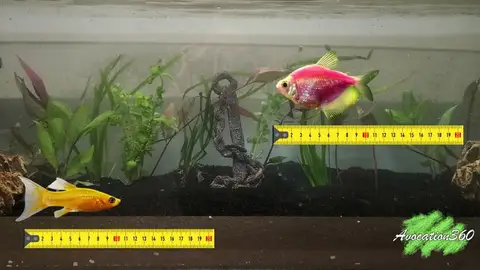
How Many Fish in a Small Tank? Simple Stocking Checks
Make a safer small-aquarium stocking choice using adult size, swimming room, group needs, behavior, waste, filtration, and water tests.