
Plakat Betta Male vs Female: Identification Guide
A clear checklist to tell male vs female plakat bettas using ventral fins, the beard when flaring, the egg spot, and a few behavior clues.
Plakat betta identification needs several mature traits because short fins hide the usual long-tail clue. Compare the ventral fins, body shape, egg spot, gill membrane, and breeding behavior, and do not treat any single sign as proof.
A genetic study of sex determination in domestic Bettas notes their wide variation in color and fin shape. The University of Florida’s guide to Betta splendens care describes how captive lines were selected for color and fin style, including short-fin types. The common male and female patterns are useful, but selective breeding, age, condition, and the individual fish can blur them.
Plakat Betta Fish
Plakat betta fish are short-finned Betta splendens. Betta fish plakat lines keep the compact body and shorter rays that wild-type fighters had, while show colors can still be bright. The short tail makes sexing harder than it is with halfmoon or crowntail fish, so you look at vents, body outline, and the flare instead of tail length.
House them like other Bettas: a heated, filtered tank with a lid, warm stable water, and plenty of cover. A female plakat betta and a male plakat betta should not share a tank except for a watched spawn. If you want tank mates later, read our notes on peaceful Betta tank mates and still watch for chasing.
Plakat Betta Sexing Checks At A Glance
| Body Shape | Male: usually slimmer and longer | Female: usually shorter and rounder |
|---|---|---|
| Ventral Fins | Male: longer and more noticeable | Female: shorter and smaller |
| Egg Spot | Male: usually absent | Female: often visible between the ventral and anal fins |
| Gill Flare | Male: larger beard-like membrane when flaring | Female: smaller flare and less visible membrane |
| Bubble Nest | Male: usually builds the stronger nest | Female: can sometimes make a small nest too |
Male Traits

A mature male plakat betta often has longer, thicker ventral fins and a more slender outline, but these traits overlap.
Ventral fins hang below the body and are separate from the pectoral fins near the gills. A male often shows a larger beard-like gill membrane when he flares. This is a strong clue, not a foolproof test.
When flaring their gills, male Bettas tend to bend and angle their bodies sideways before their attack.
The males are responsible for building the bubble nest and are great fathers. From the start of spawning, they collect all the eggs and place them within the bubbles.
Aggression varies by individual and situation. Do not use calm behavior in one moment to prove sex or long-term community compatibility.
Female Traits
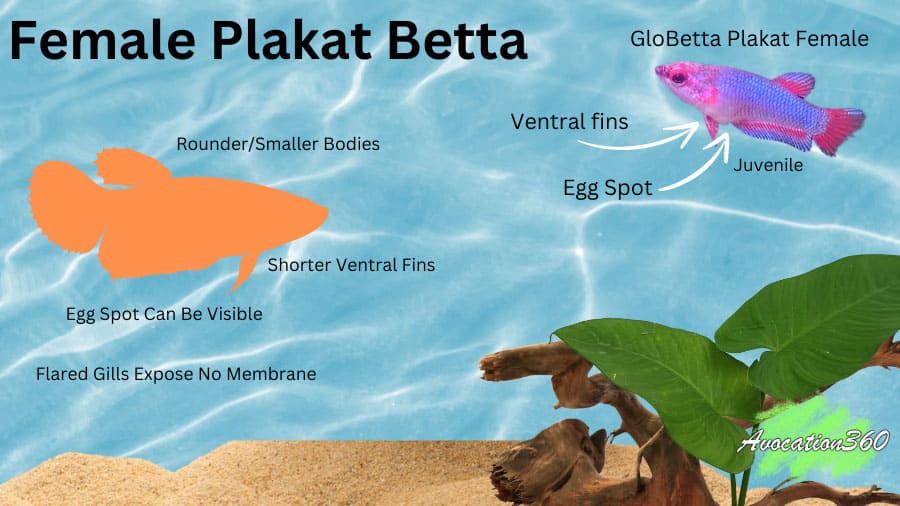
A mature female plakat betta often has a rounder body and shorter ventral fins. Color is unreliable because selectively bred females can be vivid.
Juveniles are especially difficult to sex. Females can flare and act aggressively, so behavior alone cannot identify them.
A visible egg spot, or ovipositor, between the ventral and anal fins supports a female identification. Check it with the other traits because a pale spot can be mistaken for an ovipositor.
When a female flares her gills during spawning, she does it almost submissively by lowering her head, utterly opposite to the male.
My female Plakat Betta can’t be kept with other fish as she chases everything around the tank.
Bubble Nests and Behavior
Male Bettas usually build and tend the spawning nest, but a bubble nest is not a complete sex test. Judge several mature physical traits together. If the answer affects breeding or housing, keep the fish separate until an experienced breeder or aquatic veterinarian can confirm it.

Home fish breeder sharing practical aquarium, egg-care, and fry-raising methods.
Related guides
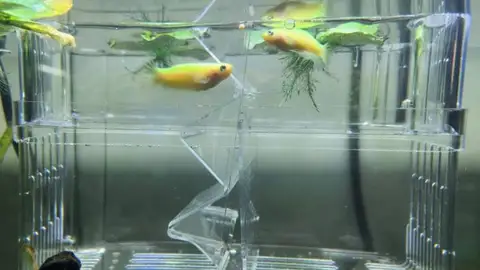
My Betta Fish Laid Eggs: What to Do
Use these first steps after an accidental Betta spawn to separate the adults, protect the fry, prepare tiny foods, and keep the water stable.
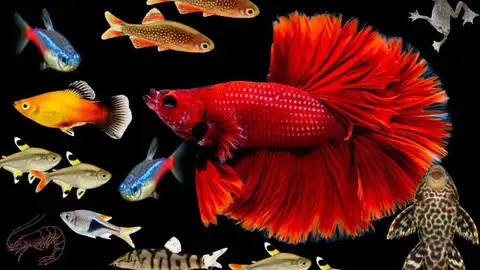
Peaceful Betta Tank Mates for Small Aquariums
See when one Betta should live alone, when a snail or shrimp may work, and why schooling fish and social bottom dwellers need a larger aquarium.

How to Breed Neon Tetras: Eggs and Fry Care
Prepare mature adults, soft acidic water, a clean spawning container, gentle egg care, and food small enough for newly free-swimming fry.