
Shrimp Tank Setup Essentials for Beginners
Plan a mature, stable shrimp aquarium with gentle filtration, tested species-specific water, safe cover, natural grazing surfaces, and careful acclimation.
How to start a shrimp tank begins with the species. Neocaridina, Caridina, Amano, and other freshwater shrimp do not all need the same water, so identify the shrimp before choosing substrate, minerals, or temperature.
The University of Florida profile of Neocaridina davidi describes cherry shrimp as small grazers that feed on biofilm, algae, leaf litter, and other material. A mature, stable aquarium gives them more natural grazing surfaces than a newly filled tank. Shrimp tank setup work is mostly cycling, matching water, and giving them cover before the animals arrive.
A Stable Shrimp Tank At A Glance
- A fully cycled tank with zero ammonia and nitrite
- A sponge filter or a protected filter intake with gentle flow
- Tested temperature, pH, GH, and KH that fit the exact species
- Stable replacement water with chlorine and chloramine treated
- Plants, wood, safe leaf litter, and other surfaces for cover and biofilm
- A secure lid and no copper medication or other treatment not labeled safe for shrimp
Shrimp Tank Guide
A shrimp tank guide for beginners can stay simple. Use a tank with a lid, a sponge filter, a heater if your room swings, and a test kit that reads ammonia, nitrite, nitrate, pH, GH, and KH. Cherry shrimp often do well in stable tap water that already has some hardness. Crystal shrimp and other Caridina usually need softer, more exact water, so do not mix those plans.
Give them plants, moss, and a few botanicals to graze. Skip copper treatments. Plan tank mates with care. Many fish will eat baby shrimp. Snails can share a planted tank if you keep feeding light. If you add plants first, our new tank aquascaping steps can help you place hardscape before the cycle starts.
Setup Order For A Shrimp Tank
- Rinse the tank, add substrate, and place your hardscape, botanicals, and plants.
- Fill with dechlorinated water and start the sponge filter and heater if your room needs one.
- Let the tank cycle before adding shrimp. Shrimp are sensitive to ammonia and nitrite, so wait until both test at zero.
- Allow biofilm and algae to develop on plants, wood, leaves, and the sponge filter. This gives shrimp a natural grazing surface.
- Acclimate shrimp slowly when you add them, especially if the shop water is very different from your tank water.
Space, Water, And Lighting
A larger water volume is easier to keep stable and provides room for plants, filter foam, and grazing surfaces. Substrate is useful but not required for every shrimp setup. Choose an inert or buffering substrate only after checking the species and the source water.
Shrimp need stable water more than they need a perfect number. Match the temperature, pH, hardness, and mineral level to the type of shrimp you keep, and avoid sudden changes during water changes. Water quality is essential, so ammonia and nitrite should always be zero before shrimp are added.
Choose lighting for the plants and algae level, not as a health requirement for shrimp. Start with a moderate daily schedule and preserve a dark period. Reduce the duration if algae or heat becomes difficult to control.
Botanicals and Sponge Filters
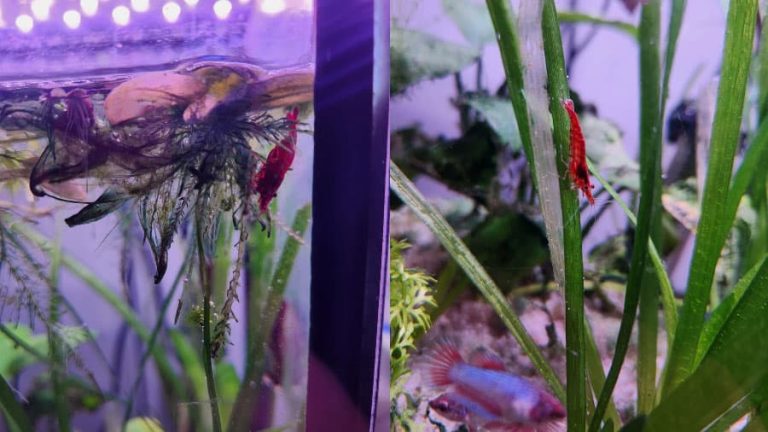
Use only clean, pesticide-free wood and leaves known to be safe for aquariums. Add a small amount at a time. As leaves soften, shrimp graze on the surface and the biofilm that grows there.
Do not add crushed coral automatically. It can raise hardness and alkalinity, which may help one setup and push another outside the species’ safe range. Test GH, KH, and pH first, then use a shrimp-specific mineral product only when the water and species require it.
Sponge filters work great in a shrimp tank. They are cheap, low-tech, safe for baby shrimp, and give the tank an additional area for biofilm to grow and plant matter to collect, almost like an all-you-can-eat buffet.
Plants and Beneficial Bacteria
Live plants are useful because they provide cover and surfaces for biofilm. Floating plants, Java Moss, and other dense growth also help small shrimp avoid fish. Keep toxic houseplant leaves and stems out of the water. If you want a supplemental food for shrimp and snails, use a small portion of Snello and remove leftovers.
Beneficial bacteria belong in the biofilter. Cycle the filter before adding shrimp and protect the colony with treated water and steady flow. An unknown homemade ferment is not a shrimp probiotic or a substitute for cycling.
Give baby shrimp plenty of moss, floating plant roots, leaf litter, and sponge filter surface area. The more safe grazing areas they have, the easier it is for them to find food without competing with adult shrimp.
Never release aquarium shrimp, plants, or water into a drain, pond, or natural waterway. Rehome unwanted animals through a responsible aquarium keeper or local store where permitted.

Home fish breeder sharing practical aquarium, egg-care, and fry-raising methods.
Related guides
Types of Freshwater Aquarium Snails
Compare beginner freshwater snails by breeding, plant safety, adult size, food, and compatibility, with an important warning about regulated apple snails.
How Many Fish in a Small Tank? Simple Stocking Checks
Make a safer small-aquarium stocking choice using adult size, swimming room, group needs, behavior, waste, filtration, and water tests.
How to Make Beneficial Bacteria for Aquarium
Learn how to grow beneficial aquarium bacteria in a filter, seed it naturally, choose a starter, test the cycle, and avoid unsafe homemade shortcuts.