
How Many Fish in a Small Tank? Simple Stocking Checks
Make a safer small-aquarium stocking choice using adult size, swimming room, group needs, behavior, waste, filtration, and water tests.
How many fish in a tank stay healthy depends on the species, adult size, swimming room, group needs, waste, and the filter. A liters-to-centimeters or gallons-to-inches rule cannot account for all of that. The Merck Veterinary Manual explains aquarium carrying capacity in terms of water quality, filtration, available area, and territory.
A Safer Small-Tank Stocking Check
Before buying fish, work through these checks in order:
- Use the fish’s full adult size, not its size in the store.
- Check whether the species needs a school, a territory, or open swimming length.
- Allow for body shape and waste. A deep-bodied fish can need more room than a slim fish of the same length.
- Choose a mature filter that can process the expected waste without strong flow that overwhelms the fish.
- Test ammonia, nitrite, and nitrate after stocking, then reduce the stock or improve the setup if water quality is hard to hold steady.
Starting Points By Tank Size
These examples help narrow your research. They are not automatic stocking allowances because the final choice still depends on the species and the tank’s usable shape.
- 5 gallons / 20 liters: Usually better for a species-only setup, one suitably kept betta, or invertebrates than a mixed fish community.
- 10 gallons / 40 liters: May suit one small centerpiece fish or a species-appropriate group of very small fish after you check their adult needs.
- 15 gallons / 60 liters: Gives a small species group more swimming length and gives the keeper more water volume for waste dilution.
- 20 gallons / 75 liters and up: Offers more choices, but it still does not make incompatible, territorial, or high-waste fish a safe match.
Do not count baby fish by their current size. Always stock for the adult size, and remember that schooling fish usually need a group rather than one or two individuals.
Factors To Consider When Calculating The Amount Of Fish For Your Tank
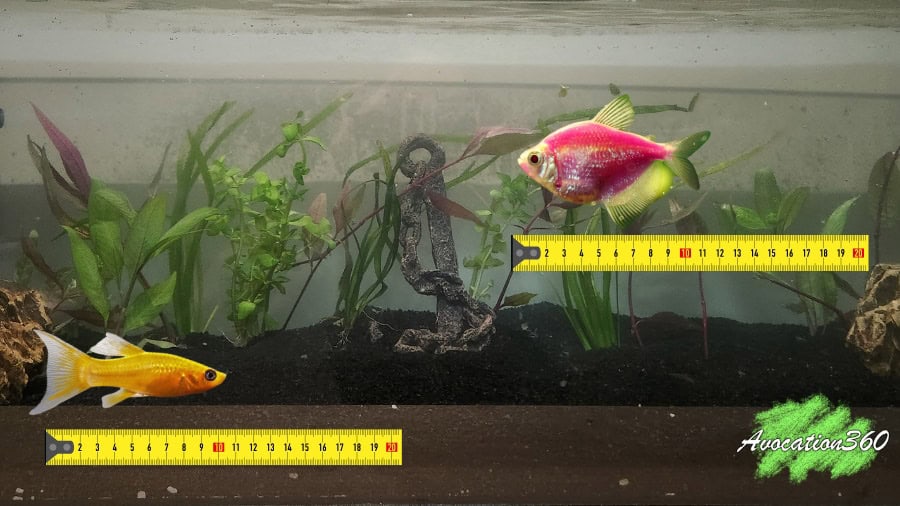
Firstly the most important factor would be your tank size and the amount of free swimming space in your tank. We all have decorations and plants that take up additional space in our tanks, decreasing the amount of water or space available for your fish.
Decorations and plants reduce open swimming room, although well-placed cover can help shy or territorial species. Measure the tank’s usable length and footprint as well as its volume.
Research the adult length, body shape, behavior, group size, and waste level of every species you want to keep. This prevents a group of small store fish from outgrowing the tank together.
Filtration and Water Quality
A mature filter helps process waste, but it does not create more swimming room or stop territorial stress. Choose a flow rate the fish can handle and leave a safety margin instead of adding fish until the filter reaches its limit.
Check ammonia and nitrite whenever you add livestock. Both should remain at zero in a cycled aquarium. Track nitrate over time so your feeding and water-change routine can keep it under control.
Overcrowding raises waste and makes stable water harder to maintain. It can also increase competition, chasing, and stress. A lightly stocked aquarium is easier to correct when a filter slows down or a fish becomes ill.
Species Compatibility and Waste
Lastly, you should consider the species you currently have in your tank and what you would like to add. Some species are very territorial or like to nip at fins, so more space is needed for those types of fish. Adding more hiding spots and plants can help, but you may still end up with stressed fish that cause problems down the line.
Choosing fish that are compatible with each other and their water and food requirements is very important for creating a happy and healthy community tank.
Some fish grow much larger and produce more waste than their store size suggests. A large pleco may outgrow a small aquarium, while small tetras stay shorter but need a proper group and open swimming length. Compare the full needs of each species before choosing a school of Neon Tetras or any bottom-dwelling fish.
Number Of Fish In Tank Planning Steps
Write down each species, its adult length, whether it needs a group, and how much waste it makes. Count the group as one unit, not as one fish at a time.
Then check whether the tank length, footprint, and filter can support that unit. RSPCA fish care advice stresses matching the setup to the species instead of filling every gallon.
If tests show ammonia or nitrite after you add fish, you added too many too soon, or the filter is not ready. Reduce feeding, increase water care, and stop adding livestock until readings stay at zero.
When A Small Tank Should Stay Lightly Stocked
Short tanks limit swimming length even when the gallon number looks fine. Tall tanks can hide that problem. High-waste fish, territorial fish, and large schools need more room than a small box can give. In those cases, fewer fish, or a larger tank, is the safer answer.

Home fish breeder sharing practical aquarium, egg-care, and fry-raising methods.
Related guides
How to Make Beneficial Bacteria for Aquarium
Learn how to grow beneficial aquarium bacteria in a filter, seed it naturally, choose a starter, test the cycle, and avoid unsafe homemade shortcuts.
Shrimp Tank Setup Essentials for Beginners
Plan a mature, stable shrimp aquarium with gentle filtration, tested species-specific water, safe cover, natural grazing surfaces, and careful acclimation.
Peaceful Betta Tank Mates for Small Aquariums
See when one Betta should live alone, when a snail or shrimp may work, and why schooling fish and social bottom dwellers need a larger aquarium.